Contact Us

General

Helpdesk

© 2022 LBS.
All Right Reserved.

Directors’ Code of Ethics

Board members are required to observe the Directors’ Code of Conduct as follows:

Twelve (12) Principles

1. To observe high standards of Corporate Governance

Have a clear understanding of the aims and purpose, capabilities and capacity of the Company to observe and maintain the high standards of Corporate Governance, ethical and business conduct in the performance and exercise of their responsibilities as Directors of the Company.

2. To devote sufficient time and effort

Devote sufficient and reasonable time, effort, energy and attention to the Company to ensure diligent performance of his/her duties, including preparing for meetings and discussions thereby reviewing in advance materials distributed by the Company, if any and making reasonable inquiries; and

Should notify the Board before accepting any new Directorships in any public listed companies and the time spent on the new appointments.

3. To avoid conflict of interest

Directors have a duty to act honestly and declare any personal interests whether directly or indirectly relating to public duties and take steps to resolve any conflicts arising in a way that protects the interests of the Company;

Should dedicate their best efforts to advancing the Company’s interest and to make decisions in the best interest of the Company and independent of outside influence including but not limited to financial interests, other business interests, other employment, entertainment and gifts; and

When acting on of behalf of the Company, the Director should never accept any benefit as an inducement or reward for taking any action (or specifically not taking any action) in their official capacity as a Director and gifts other than of token value should generally be refused.

4. To avoid misuse of position and information

Never uses his/her position as Directors and improper use of any information acquired by virtue of his/her position as Director, directly or indirectly, an advantage for himself/herself or for any other person; and

Directors are prohibited from dealing in securities of the Company when he/she is in the possession of unpublished price sensitive information.

5. To ensure integrity of records

Should not place themselves under any financial or other obligation to any person that might reasonable be thought to influence them in the performance of their duties;

Should disclose immediately all contractual interests whether directly or indirectly with the Company; and

Should be willing to exercise independent judgment and, if necessary, openly oppose if the vital interest of the Company is at stake.

6. To ensure confidentiality of communication and transactions

Shall maintain confidentiality of information entrusted to them by the Company. The Company’s confidential and proprietary information shall not be inappropriately disclosed or used for personal gain or advantage.

7. To ensure compliance with applicable laws

Should have access at all times to the advice and services of the Management, Company Secretaries, Internal Auditors and External Auditors and the Board may seek any independent professional advice at the expense of the Company if required in furtherance of their duties to ensure all applicable laws, rules and regulations, confidentiality obligations, corporate policies and procedures are complied with.

8. To demonstrate openness and timeliness of communication

Subject to the restrains of all applicable laws, Directors will ensure openness and timeliness of the release of announcements and to give reasons about decision and actions.

9. To exercise duties and act honestly in the best interest of the Company

Should at all times exercise their powers of the purposes they were conferred, for the benefit, prosperity and sustainability of the Company in any transactions and to act honestly and responsibly in the exercise of his powers in discharging his duties in the best interests of the Company and the Group.

10. To uphold accountability

Uphold accountability at all times. This includes ensuring that the Company’s resources are properly safeguarded and the Company conducts its operations as economically, efficiently and effectively as possible at all time.

11. To maintain positive relationship with shareholders, employees,
creditors and customers

Should be conscious of the interest of shareholders, employees, creditors and customers of the Company;

Should at all times promote professionalism and improve the competency of management and employees; and

Should ensure adequate safety measures and provide proper protection to workers and employees at the workplace.

12. Corporate Social Responsibility

Directors should be committed to acting responsibly for the Company’s actions and strive to operate in a way that encourage a positive impact through its activities on the environment, consumers, employees, communities, stakeholders and public as a whole.


Bumi Lot: How to check its status and the reasoning behind different Bumi quota in each state

Despite the National Economic Policy or NEP turning 50 this year, many are still unfamiliar with Bumi Lot and how it can benefit them. Here, we unveil the important things to know when buying a Bumi Lot.

As Malaysians, we all know about the New Economic Policy (NEP). The policy, which was adopted in 1971, included the creation of the Bumi Lot quota. These are units of land or property, which can only be purchased and owned by Bumiputeras.

With the aim of increasing the percentage of land ownership by Bumiputeras in Malaysia, at least 30% of property including housing developments had to be allocated to Bumiputeras. This applies to both residential and commercial property.

However, all land matters under Malaysian law fall under the jurisdiction of State Authorities. Therefore, the Bumi Quota differs from state to state. For example, the Federal Territory of Kuala Lumpur has the Bumi Quota set at 30%.

If you are interested in purchasing a Bumi Lot, we’ve outlined the important things you need to know below.

What is the difference between Bumi Lot and non-Bumi Lot?

A Bumi lot is cheaper than a non-Bumi Lot, usually by at least 5% all the way up to 15%. This is due to the Bumi Discount, which is a mandatory minimum discount offered to Bumiputeras on property.

As mentioned earlier, Bumi Lots can only be purchased and owned by Bumiputeras. However, it can be sold to non-Bumi. Do note that it will not be easy as it is a lengthy process and involves many procedures. In the majority of cases, these purchase requests are rejected.

It is also important to note that Bumi Lots are not the same as Malay Reserve Land (MRL). The latter is also known as “Tanah Rizab Melayu” and can only be owned and held by Malays as stated under the Malay Reservation Enactment 1913.

State guidelines on Bumiputra quota in Malaysia

As is the case with Bumi Quota, land laws fall under the jurisdiction of the State Government and therefore a Bumi Discount will also differ between the various states.

Below is a summary of Bumi Quota and Bumi Discount in each state in Malaysia:

State Bumi Quota Bumi Discount
Perlis
  • 30 – 50%, depending on State consent
  • Mostly are Malay Reserved Land
Kedah
  • Residential: 30 – 50%
  • Commercial: 30%
Minimum 5%
Penang 30% for all properties 5% for all property stages
Perak
  • State alienated land: 30%
  • Private land: 20%
Minimum of 5% discount except for low-cost property
Selangor
  • Residential: depends on State Constitution as per Lembaga Perumahan dan Hartanah Selangor’s Blue Print Perumahan Selangor Darul Ehsan
  • Commercial: 60% for Low-Cost Commercial Units (S&P RM120,000) and 50% for other Commercial Units
  • Industrial (more than 10 acres): 50% for Low-Cost Industrial Units (RM150,000) and 40% for other industrial units
Residential: 7% (except low cost)

Commercial: 10%

Industrial: 10%
Kuala Lumpur 30% for all housing and commercial projects 5%
Negeri Sembilan Minimum 30% for housing and commercial projects 10% (except low cost)
Melaka
  • Residential: 40% in Kesidang, Kota Laksamana, and Bandar Hilir. 60% in other areas.
  • Commercial: 35% in Kesidang, Kota Laksamana, and Bandar Hilir. 40% in other areas.
5 – 15%
Johor
  • 40% for all residential, commercial, and industrial development with conversion approval before 11 December 2004
  • For residential with conversion approval after 11 December 2004:
– 40% for selling price < RM200,000
– 30% for selling price > RM200,000 but < RM300,000
– 20% for selling price > RM300,000
15%
Pahang Minimum 30% depending on State Exco’s decision based on the location of the project.
Terengganu Private land: 30%
  • Surrender and re-alienation land project: 50%
7 – 7.5%
Kelantan Mostly are Malay Reserved Land
What’s the reasoning behind the Bumi Lot percentage in each state?

The percentage for Bumi Lots in different states is determined by the area population and planning made by local authorities. This may be the reason why some states have a higher Bumi Lot percentage and discount as they are more populated with Bumiputras and people who belong in the B40 income group.

For example, there is a distinctive difference between the Eastern state of Terengganu and the nation’s capital of Kuala Lumpur. Based on the Household Income and Basic Survey Amenities Report 2019 released by the Department of Statistics Malaysia (DOSM), the median income is RM5,545 while the mean income is RM6,815. Kuala Lumpur, on the other hand, has a median income of RM10,549 and a mean income of RM13,257.

These statistics are compounded by the fact that 97% of the population in Terengganu is Bumiputera compared to Kuala Lumpur’s 40.32% Bumiputera population. With a higher density of low-income Bumiputeras in the state, Terengganu has a relatively higher Bumi Discount and Bumi Lot percentage of 7.5% and 50% (for surrender and re-alienation land projects) compared to Kuala Lumpur’s 5% and 30%.

How can one’s Bumiputera status be verified?

This is a tricky situation as the term “Bumiputera” is not defined in the Federal Constitution. However, one’s Bumiputera status be verified via the following methods:

  1. The ‘Keturunan’ column in birth certificates must reflect both parents of an individual to be a Bumiputera.
  2. NRIC extracted from the National Registration Department.

Buyers who are looking to purchase properties should always ask developers if their properties are endorsed as Bumi Lots or are on Malay Reserve Land (MRL). Always check with the Land Office for various matters regarding the property before you decide to purchase.

Selling a Bumi Lot to a non-Bumi

As aforementioned it’s a tricky process to sell a Bumi Lot to a non-Bumi. According to real estate negotiator Johanizam Mustakim, if there are unsold Bumi Lots, the developer will make an application for release at the local Land Office.

“The developer will have to provide a report and convincing reasons for the release. An example would be the lack of demand for the Bumi lot even after years of advertising. A certain fee will have to be paid. The fee is determined by local authorities but is usually in the form of a refund for the initial discounted amount. For example, if the Bumi discount is 10%, then that is the amount that will be paid to the state.

“The developer can appeal to the Land Office if the initial application is rejected. If successful, the non-Bumi buyer will have to reimburse the developer with the discounted amount from the initial purchase” he said.

An important detail to keep in mind is that a “released” Bumi Lot does not make it a non-Bumi Lot. Once the non-Bumi owner of the Bumi Lot chooses to sell to another non-Bumi, he will need to apply again for the Land Office’s consent for the transfer of ownership.

Should you buy a Bumi Lot?

As with most things, Johanizam says that there are pros and cons to buying a Bumi Lot.

Pros of buying a Bumi Lot
  • Owning a Bumi Lot in a highly-populated Bumi neighbourhood such as Shah Alam, Banting and Sungai Buloh is a good investment as there is high demand if the owner plans to rent it out or sell it.
  • For Leasehold Bumi lots without restrictions, it is usually subject to easier approval by the Land Office when selling to a non-Bumi buyer.
Cons of buying a Bumi Lot
  • There is usually low demand for Bumi Lots due to the restricted market (Bumiputeras only). As The Real Estate and Housing Developers’ Association (REHDA) revealed, this is especially true in urban and non-Bumi areas.
  • In terms of capital appreciation, Bumi Lots are slow to increase. This may be due to the low demand. Owners reap only but a small profit from the sale of their property and therefore, are not the best long-term investments.
  • It is hard to convince the Land Office to release Bumi Lots to non-Bumis. The majority of applications are rejected.
  • A non-Bumi owner will have to apply to the Land Office again if he chooses to sell to another non-Bumi.

Board Charter

1. Introduction

The Board of Directors of LBS Bina Group Berhad (“LBGB” or “Company”) and its subsidiaries (collectively referred to “Group”) recognises that good corporate governance is essential for delivering sustainability, enhancing business integrity and shareholders value towards achieving the Group’s corporate vision and mission.

2. Objective

To promote the highest standards of Corporate Governance within the Group and to clarify, among others, the roles and responsibilities as well as fiduciary duties; various legislations and regulations affecting their conducts and application of sound corporate governance principles towards corporate accountability with the ultimate objective of maximisation of shareholders’ value and safeguarding stakeholders’ interests.

3. Roles And Responsibilities

3.1 Responsibilities of The Board

The Board takes full responsibility in leading, governing, guiding and monitoring the entire performance and enforces standards of accountability including the processes for financial reporting, risk management and compliance.

The Board assumes, amongst others, the following roles and responsibilities:-

  • To formulate, implement and evaluate the strategic plans and direction of the Group;
  • To oversee the conduct and performance of the Group’s businesses;
  • To identify principal risks affecting the Group, setting the risk appetites and to ensure the implementation of appropriate mitigation measures;
  • To establish and review training programme and succession planning to the Board and all candidates appointed to senior management positions are of sufficient calibre;
  • To approve the change of corporate organisation structure plan including new investments or divestments both locally or abroad;
  • To oversee the development and implementation of shareholder communication policy for the Group; and
  • To review the adequacy and the integrity of the Group’s management information and internal control system.

The following are some of the major matters specifically reserved for the Board:-

(1) Review, debate and approval of corporate strategies, plans, targets and programmes proposed by management prior to their implementation and execution;

(2) approval and monitoring the progress of material investments and divestments, mergers and acquisitions, corporate restructuring both local and abroad;

(3) appointment of new Directors, Chief Executive Officer/ Group Managing Director and other senior management positions base on recommendation of the Group’s Nomination and Remuneration Committee;

(4) annual financial statements and the quarterly financial results prior to releasing to Bursa Securities Malaysia Berhad (“Bursa Securities”); and

(5) material related party transactions and capital financing.

3.2 Roles of Chairman And Group Managing Director

The roles of the Chairman and Group Managing Director are distinct and separate to ensure balance of power and authority. The Chairman of the Board is mainly responsible to provide leadership for the Board to perform effectively, lead the board to practice high standard of corporate governance, set the corporate cultural tone from the top, chairing Board meetings and setting Board agendas, and promoting effective Board relationships. He is also responsible for determination of strategic direction of the Group for the Board’s consideration and approval. The Group Managing Director also acts as the Group’s official spokesperson.

3.3 Roles of Board Committees

The Board delegates specific responsibilities to the respective Board Committees comprising:-

(i) Audit Committee;

(ii) Employee Share Option Scheme (“ESOS”) Committee;

(iii) Nomination and Remuneration Committee (“NRC”); and

(iv) Risk Management Committee (“RMC”).

The Board Committees operate within clearly defined roles and responsibilities as set
out in Term of Reference of the respective Board Committees. The Board Committees report to the Board of their deliberations, findings and recommendations. Minutes of the Board Committees are presented at the Board meetings for further discussion and direction. While these Committees have the authority to deliberate on matters delegated to them, all decisions and/or recommendations made by these Committees will be brought to the attention of the Board, who is collectively responsible for the Group’s success, business, strategy, risk management, operational and financial performance.

(i) Audit Committee;

The key responsibilities of Audit Committee are to ensure high corporate governance practices whilst providing oversight on the Group’s financial reporting, disclosure, regulatory compliance, risk management and monitoring of internal control processes within the Group. The Audit Committee meets regularly amongst others to review the quarterly results, full year financial
statements, audit reports which include observations pertaining to risk management and internal controls, as well as related party transactions.

(ii) ESOS Committee

The Company has established the ESOS which shall be valid for a period of ten (10) years from 18 September 2012 to 17 September 2022.

The Board has delegated to the ESOS Committee to review the rules and regulations relating to ESOS and to ensure the ESOS is implemented in accordance with the Bye-Laws, amongst others, eligibility, options offer and allocation, basis of allotment, termination and appeals, if any.

(iii) RMC

The primarily responsibility of RMC is to ensure that the integrated risk management functions within the Group are effectively discharged. The RMC assists the Board in, amongst others, identifying, evaluating, monitoring and reporting of risk areas and providing control measures, recommendations and management action plans to mitigate such risks through periodic meetings and updates to the Audit Committee in a timely basis.

(iv) NRC

The members of NRC comprise entirely Non-Executive Directors with the majority being independent as recommended by Malaysian Code on Corporate Governance (“CG Code”).

The NRC reviews the procedures for appointment of Directors and senior management personnel of the Group and their remuneration package. It also undertakes individual assessment of the members of the Board for re-appointment and new appointment. The determination of the remuneration of the Independent Non-Executive Directors (“INEDs”) is a matter for the Board
as a whole.

NRC is also tasked with the annual review of the required mix of skills and experience and other qualities of the Board members; examine size of the

3.4 Roles of Senior Independent Non-Executive Director

The Board has appointed a Senior Independent Non-Executive Director who acts as a designated contact to whom shareholders’ concerns or queries may be raised, as an alternative to the formal channel of communication with shareholders.

4. Board Size And Composition

Pursuant to the Articles of Association of the Company, the Board shall not be less than three (3) directors and not more than fifteen (15). The Board has power under the Articles of Association to appoint directors to fill casual vacancy or as additional directors.

The Board shall consist of qualified individuals with diverse set of skills, experience and knowledge necessary to govern the Company. The composition and size of the Board is such that it facilitates the decision making of the Board.

The Independent Directors provide independent judgment, experience and objectivity without subordinated to operational considerations. They help to ensure that the interests of all shareholders are indeed taken into account by the Board and that the relevant issues are subjected to objective and impartial consideration by the Board.

5. Board Functions

5.1 Ethics And Compliance

5.1.1 Code of Ethics for the Board

The Code of Ethics for the Board provides guidance for proper standards of conduct, sound and prudent business practices as well as standard of ethical behaviour for Directors, based on principles of integrity, responsibility, sincerity and corporate social responsibility.

The Board observes the following Code of Ethics:-

(i) Directors’ Code of Ethics established by the Company;

(ii) Companies Act, 2016; and

(iii) The Code of Ethics for Company Directors issued by the Companies Commission of Malaysia.

5.1.2 Duty of Care and Diligence

All directors shall at all times exercise his/her powers for a proper purpose and in good faith in the best interest of the Company. He/she shall exercise reasonable care, skill and diligence with the knowledge, skill and experience which may reasonably be expected of a Director having the same responsibilities; and any additional knowledge, skill and experience which he/she in fact has.

5.1.3 Business Judgement

A director who makes a business judgement is deemed to meet the requirements of the duty as aforesaid and the equivalent duties under the common law and in equity if he/she:-

(i) Makes the business judgement in good faith for a proper purpose;

(ii) Does not have a material personal interest in the subject matter of the business judgement;

(iii) Is informed about the subject matter of the business judgement to the extent the Director reasonably believes to be appropriate under the circumstances; and

(iv) Reasonably believes that the business judgement is in the best interest of the Company.

5.1.4 Reliance of Information Provided by Others

A Director in exercising his/her duties may merely rely on information, professional or expert advice, opinions, reports or statements including financial statements and other financial data, prepared, presented or made by:-

(i) Any officer of the Group whom the Director believes on reasonable grounds to be reliable and competent in relation to the matters concerned;

(ii) Any other person retained by the Group as to matters involving skills or expertise in relation to matters that the Director believes on reasonable ground to be within the person’s professional or expert competence;

(iii) Another director in relation to matters within the Director’s authority; or

(iv) Any committee to the Board of which the Director did not serve in relation to matters within the committee’s authority.

5.2 Risk Management

The Group adopts the Enterprise Risk Management (ERM) framework to manage its risks. The ERM framework requires the Group to identify, evaluate, monitor, mitigate and report all material risks associated to its business and operations. The framework provides the Board and Management with a tool to anticipate and manage both the existing and potential risks, taking into consideration the changing risk profiles and dictated by changes in business strategies, operating and regulatory environment, and functional activities from time to time.

5.3 Policy And Procedures

The Group should establish and clearly document internal policies and procedures of its major business units to serve as day-to-day operational guides to ensure compliance with internal controls and applicable laws and regulations. The policies and procedures shall be reviewed from time to time or as and when necessary, to ensure continuous improvements in operational efficiency taking into consideration the changing industry profile on regulatory requirements, risks and internal control measures for mitigation, and new products and services.

5.4 Sustainability

The Board recognises the importance of sustainability that improves the continuous improvement process for an organisation in the modern economy which includes the sound management of people and environment, and business sustainability eventually.

The Board shall take into consideration the interests of the community, employees, environment, shareholders and other stakeholders when making business decision and managing resources in developing its sustainability strategies through internal policies which aim at securing sustainable elements to guide policies towards sustainability development. The Board should also introduce formal strategies on promoting the sustainability of the Company, with particular focus on the
environmental, social and governance aspects of the business.

5.5 Stakeholder Communication

In ensuring the high standards of transparency and accountability in its communication to stakeholders as well as to potential investors, research analysts and the public, the Group has put in place an Investor Relations (IR) platform in ensuring the Group’s IR message is clearly coordinated and communicated.

The IR activities are led by the Group Managing Director and supported by the IR Team and duly governed by IR Policy as its official corporate disclosure policy and procedure in disseminating corporate and material information to the investing public. The mode of communications to shareholders and investors shall include the followings:-

(i) timely announcements and disclosures made to Bursa Securities;

(ii) regular dialogues with research analysts to explain periodical results achieved and business strategies;

(iii) press conference held after each general meeting to provide media opportunity to receive updates from the Board and to address queries or areas of interest of the media; and

(iv) participates in institutional investors’ forums.

6. Board Efficiency

6.1 Selection of Candidates

The NRC is responsible for identifying and nominating suitable candidates for appointments to the Board for approval, either to fill vacancies or as addition to meet the changing needs of the Group. Before recommending an appointment to the Board, the NRC undertakes a comprehensive evaluation of the candidates. The NRC also takes into accounts the Group’s business and matches the capabilities and contribution expected for a particular appointment.

The NRC shall conduct an interaction session with the proposed candidates and assesses the candidates based on the following aspects:-

(i) Specific knowledge, skill and working experience of the candidate;

(ii) Trainings attended by the candidate;

(iii) Time commitment by the candidate;

(iv) Independence and conflict of interest;

(v) External directorships of the candidate; and

(vi) Personal and professional ethics, integrity and other expertise or knowledge that could complement to the experience and skill sets of other Board members.

6.2 Appointment To The Board

The appointment is conducted in accordance with the recommendation of the NRC and after deliberation and satisfaction by the Board.

6.3 Terms of Appointment

Each year, one-third (1/3) of the Directors retire from office, and being eligible, may offer themselves for re-election at the Annual General Meeting. In addition, all Directors shall retire from office once at least, every three (3) years, but shall be eligible for re-election.

Directors appointed during the financial year hold office until the next Annual General Meeting and if eligible, may offer themselves for re-election.

6.4 Tenure of Independent Directors

The tenure of service of Independent Directors is capped at the maximum limit of nine (9) years as recommended by the CG Code. An Independent Director who has served the Company for nine (9) years may, subject to NRC’s recommendation and shareholders’ approval, continue to serve the Group in the capacity of Independent Director as guided by CG Code.

The NRC undertakes assessment of the independence of the Independent Directors, upon admission, annually and as and when new interest or relationship develops.

6.5 Board Diversity

Board room diversity is good corporate governance. The Board shall at all times promotes and welcomes diversity and gender mix in its composition for ensuring that corporate board includes a diverse set of skills, backgrounds and knowledge which can widen the Board’s perspective in effectively discharging its duties and responsibilities as well as assists the Board in its decision-making process.

6.6 Directors’ Remuneration

The Group has in place a remuneration framework for Director and Key Senior Management of the Group. The framework is sufficient to attract, retain and remunerate Directors for their contribution to the Group. This framework includes fees, monthly and meeting allowances for INEDs which are based on industry standards and set by reference to the responsibilities taken on by them. In order that it remains competitive and consistent with the culture, objective and strategy of the Group, this remuneration framework is reviewed annually to ensure it remains the market competitiveness.

6.7 Board Effectiveness

The Board recognises the importance of assessing the effectiveness of individual directors, the Board and its Committees.

Annually, the NRC provides a formal and transparent procedure for the assessment on the effectiveness of individual directors and the Board as a whole. This shall take the form of questionnaires comprising an evaluation by the NRC and the results of the assessment will be collected and collated by the Company Secretary, on behalf of NRC for review and to ascertain performance and effectiveness at the NRC meeting.

6.8 Board And Management

The Board delegates authority and vests accountability for the Group‘s day-to-day operations with the Key Senior Management team led by the Group Managing Director to achieve the corporate objectives.

The Board delegates the resources management to the Key Senior Management team and has unrestricted access to any information pertaining to the Company and the Group. As such, the Key Senior Management team would be invited to attend the Board Meetings as and when necessary, to furnish with explanations and comments on the relevant agenda items tabled at the Board Meetings or to provide clarification on issue(s) that may be raised by the Directors. The Board and the Key Senior Management team work together to make decisions that will result in growth of the Company, and subsequent financial benefit to shareholders.

The Company has put in place the Directors’ and Officers’ insurance coverage against liabilities arising from holding offices by virtue of their positions and in connection with the performance of their responsibilities. Nevertheless, the Directors and Officers shall not be indemnified where he/she found guilty in respect of any negligence, default, breach of duty or breach of trust.

6.9 New Directorship And Time Commitment

The Board values the experience and perspective gained by the Directors from their services on the board of other companies, organisations and associations. However, they are expected that they will always be in a position to allocate sufficient time to meet the expectation of his/her role as Directors of the Company.

All Board members shall notify the Board before accepting appointment of any new directorships in other listed companies as long as the new directorships is not in conflict with the business and does not affect his performance while holding office as Director of the Company. The notification shall include an indication of time that will be spent on the new appointment and to ensure that such appointments would not unduly affect his/her time commitment and responsibilities to the Board and the Group’s corporate activities.

The Directors are guided by the requirements of Main Market Listing Requirements (MMLR) of Bursa Securities on attendance of at least 50% of Board Meetings held in a financial year.

6.10 Restriction Of Directorships

The limit on the number of directorships that may be held at any point of time by the Board members are not more than 5 for listed companies and no restriction of the number of directorships in non-listed companies, excluding the position on the Board of the Company which requires active involvement as a board member or such other requirements as prescribed by the MMLR.

6.11 Directors’s Training And Development

Newly appointed Directors shall attend an induction programme which is tailored to meet their individual needs. This includes meeting with Key Senior Management team to enable them to build up a detailed understanding of the Group’s business and strategy, and the risks and issues which they are faced. The induction training programme is supplemented by ongoing training and development programmes.

In addition to the Mandatory Accreditation Programme (MAP) to all the newly appointed Directors, the Board shall evaluate and determine the continuous training needs of its members from time to time in order to enhance his/her contribution to the Board and to effectively discharge his/her duties as a Board member.

MMLR of Bursa Securities mandates a statement by the Board containing a brief description on the type of trainings directors have attended for the financial year. Where any of the Directors have not attended any training during the financial year, the reasons thereof for each Director must be stated.

The Company Secretary facilitates the organisation of internal and external training programmes for Directors and keeps a complete record of the training attended by the Directors. Directors may request that training programmes on specific subjects be arranged in order to facilitate them in discharging their duties effectively.

6.12 Company Secretary

The Board should ensure it is supported by a suitably qualified and competent Company Secretary.

The Company Secretary plays an important advisory role and as a central source of guidance, information and advice to the Board and Board Committees on issues relating to corporate compliance with the relevant laws, rules, regulations and procedures affecting the Board and the Group, as well as best practices of governance.

The Board members have unlimited access to the services of the Company Secretary and is updated with new regulatory, regulations or requirements of current developments in the regulatory framework and governance practice concerning their duties and responsibilities.

The Company Secretary shall be of a senior position with adequate authority and report directly to the Board. The appointment and removal of the Company Secretary will be subjected to the approval of the Board.

7. Process of Board

7.1 Board Meeting

(a) Proceedings

The Directors may meet together for the despatch of business, adjourn and otherwise regulate their meetings as they deem fit. A Director may at any time and the Company Secretary shall on his/her requisition summon a meeting of the Directors.

(b) Notice of Meeting

Unless otherwise determined by Directors from time to time, at least five (5) clear days’ notice of all Directors’ meeting shall be given to all Directors. Any Director may waive notice of any meeting either prospectively or retrospectively.

(c) Quorum for Board Meeting

As provided by the Articles of Association, the quorum shall comprise at least three (3) Directors for the time being of the Company.

(d) Frequency of Meeting

The Board shall meet regularly to discuss business strategy, financial performance, potential strategic acquisition or alliances, matters pertaining to compliance and governance as well as reports on matters deliberated by the respective Board Committees. On a quarterly basis, amongst others, the Board reviews financial performance of the Group, reports from internal auditors and approves the quarterly results of the Group at its meeting.

(e) Attendance at Board Meeting

The office of a Director shall become vacant if a Director is absent from more than 50% of the total Board Meeting held in a calendar year.

(f) Voting

Any question arising at a Board Meeting is decided by a majority of votes and the Chairman of the meeting has a second casting vote. A Director is required to abstain from deliberation and voting in respect of any contract or proposed contract or arrangement in which he/she has direct or indirect interest.

(g) Conflict of Interest

The Directors shall comply with the Companies Act, 2016 in connection with disclosure of shareholdings and interest in the Group and interest in any contract or proposed contract with the Group, which include the nature, character and extent of any office or possession of any property, whether directly or indirectly duties or interest that might be created in conflict with his/her duty or interest as a Director of the Company.

(h) Right of Directors to access information and advice

Management provides the Board and Committees with information in a form, within acceptable timeframe and quality that enable them to discharge their duties and responsibilities effectively.

Directors are entitled to request and received additional information they consider necessary in order to make informed decision, including obtaining professional independent advice at the Group’s expense.

7.2 Committee Meeting

The Board Committees meet as and when the need arises, to deliberate on matters under their purview.

7.3 Decision-Making

All corporate strategic decisions are made at Board Meetings after due processes, discussions and deliberations.

Where appropriate, decisions are also taken by way of circular resolutions in between scheduled meetings. Such resolutions are signed by all the Directors and valid as if it has been passed at a Board Meeting duly called and constituted.

8. Review Of Board Charter

This Board Charter has been endorsed by the Board and is made available for reference on Company’s corporate website.

It shall be reviewed by the Board and updated from time to time to ensure the Group remains at the forefront of best practices in corporate governance. Any subsequent amendments to the Board Charter should only be approved by the Board.

Donations & Sponsorships Policy

1. Introduction

All Donations and Sponsorships provided by LBS Bina Group Berhad (“LBGB”) and its subsidiaries (collectively “LBGB Group” or “Group”) must be ethical and legal under applicable laws and not with intention to influence any business decisions or cause other to perceive it as such.

2. Scope

This Policy is applicable to the Personnel of LBGB Group and Business Associates acting on behalf of LBGB Group. Joint-venture companies and associated companies are encouraged to adopt these or similar principles. This Policy should be read in conjunction with the Anti-Bribery and Corruption Policy and the Whistleblowing Policy of LBGB Group.

3. Definitions

“Business Associate” means an external party with whom LBGB Group has, or plans to establish, some form of business relationship. This may include clients, customers, joint ventures, joint venture partners, consortium partners, outsourcing providers, contractors, consultants, subcontractors, suppliers, vendors, advisers, agents, distributors, representatives, intermediaries and investors.

“Donations” means voluntary contributions in the form of monetary or non-monetary gifts to a fund or cause.

“Personnel” means Directors and all individuals directly contracted to the Company on an employment basis, including permanent, temporary employees and interns.

“Sponsorships” means partnering with external organisations to deliver mutual benefits through exchange of monies, products, services, content or other intellectual property.

4. Donations And Sponsorships

The Group makes donations to LBS Foundation, a registered non-profit organisation with the sole aim is to give back to the community through its 4 main pillars: Education, Community, Environment and Health. Other Donations and Sponsorships request will be assessed on a case-by-case basis and subject to the approval of the Executive Director.

4.1 Acceptable Donations & Sponsorships

a) Any charitable Donation or Sponsorships made or offered on behalf of the Group must:

i) not be related to, dependent on, or made in order to win, or influence, a business deal or decision;

iI) be given direct to the relevant charity or organisation; and

b) The Head of Department who handles the request for any Sponsorship or Donation shall conduct due diligence on the recipient to ensure that the recipient is a legitimate organisation, prior to obtaining approval from the Executive Director.

4.2 Non-Acceptable Donations & Sponsorships

a) The Group shall not donate to private individuals or private accounts or to individuals or organisations that could prove detrimental to the reputation of the Group.

b) The Group should not support via a sponsorship where the activities or proposals:

  • conflict with the Group’s values or objectives;
  • will require the Group to give, or appear to presume a strong explicit endorsement of the products and services of the Recipient; or
  • do not demonstrate a genuine readiness or capability to carry out the obligations.

5. Donations And Sponsorships Requests

All Donations or Sponsorships requests must be made in writing to the Group in reasonable period of time before the anticipated commencement of the relevant event/action.

The Executive Director shall approve the proposal upon being satisfied with result of the due diligence conducted on the recipient in accordance with the guideline of the Group.

6. Policy Violation

The procedure of reporting any violations of this Policy shall be referred reporting mechanism contained in the Whistleblowing Policy.

7. Policy Review

This Policy has been approved by the Board of Directors and shall be made available on the Group’s corporate website and internal computer networking system. All Heads of Department are responsible to inform their staff and clearly explain to them the contents of this Policy.

This Policy shall be reviewed by the Board of Directors and updated whenever necessary to ensure its effective implementation. Any subsequent amendments to this Policy should be approved by the Board of Directors.

Gift, Entertainment & Hospitality Policy

1. Introduction

To establish guidelines on the giving or receiving of Gift, Entertainment and Hospitality to and from Customers, Business Associates and/or Third Party.

2. Scope

This Policy is applicable to the Personnel of LBS Bina Group Berhad (“LBGB”) and its subsidiaries (collectively “LBGB Group” or “Group”), and Business Associates acting on behalf of LBGB Group. Joint-venture companies and associated companies are encouraged to adopt these or similar principles. This Policy should be read in conjunction with the Anti-Bribery and Corruption Policy and the Whistleblowing Policy of LBGB Group.

3. “No Gift & Entertainment” Policy

3.1 LBGB Group adopts “No Gift, Entertainment and Hospitality” Policy whereby all members including but not limited to their Directors and Staffs of LBGB Group are prohibited from giving and receiving any Gift, Entertainment or Hospitality. The policy herein also extends to family members, representatives and/or Business Associates of Personnel and Third Party.

3.2 All Personnel of LBGB Group shall abide to this Policy to avoid any conflict of interest or seen to be a conflict of interest, and may potentially tarnish the Group’s reputation or be in violation of anti-bribery and corruption laws.

3.3 Although LBGB Group practices “No Gift, Entertainment and Hospitality” Policy, situations may arise whereby it may be customary or necessary to give or receive gift, entertainment or hospitality during the ordinary course of business. Under such circumstances, the following exceptions to the Policy may apply:

i) meet the requirements of applicable internal policies of LBGB Group;

ii) as a legitimate, justified business courtesy;

iii) be given in a transparent manner, modest in value and valid purposes; and

iv) not influence or appear to influence the independence of the receiver of the said Gift, Entertainment or Hospitality.

4. Definitions

“Business Associate” means an external party with whom LBGB Group has, or plans to establish, some form of business relationship. This may include clients, customers, joint ventures, joint venture partners, consortium partners, outsourcing providers, contractors, consultants, subcontractors, suppliers, vendors, advisers, agents, distributors, representatives, intermediaries and investors.

Corporate Gift normally bears the Group’s name and logo and are nominal/appropriate value.

Entertainment and/or Hospitality means the considerate care of guests, which may include refreshments, accommodation and entertainment. For avoidance of doubt, all forms of entertainment shall be deemed to be included under this definition as well.

Gift means anything of value (such as money or cash equivalent vouchers, goods and services) given to any person or organisation without any expectation of anything in return or without any intention to influence someone to act improperly.

Personnel means Directors and all individuals directly contracted to LBGB Group on an employment basis, including permanent, temporary employees and interns.

Public Official means an individual who:

(i) holds a legislative, administrative or judicial position of any kind; or

(ii) who performs public duties or exercises a public function for or on behalf of a country or territory (or subdivision thereof) or for any public agency or enterprise.

Third Party means anyone who at any time performs (or who is intended to perform) services for or on behalf of any entity of LBGB Group including anyone who is engaged (by contract or otherwise) or paid to represent any entity of LBGB Group such as suppliers, distributors, business contacts, agents, representatives, intermediaries, middlemen, introducers, sponsors, consultants, contractors, advisers and potentially Public Official.

“Facilitation Payments” means typically small, unofficial payments or other provision made personally to an individual in control of a process or decision. It is given to secure or expedite a routine or administrative duty or function, to which the payer is entitled, legally or otherwise.

5. Accepting Gift, Entertainment And Hospitality

5.1 LBGB Group acknowledges that gift giving is a central part of business etiquette. All Gift, Entertainment or Hospitality received shall be recorded via online Declaration Form.

5.2 Gift, Entertainment or Hospitality may be accepted by any Personnel without approval provided that it is:

i) a Corporate Gift;

ii) perishable items (such as fruits, festive cookies or delicacies offered during festive seasons or ceremonial occasions); or

iii) an exception falls under Clause 3.3 above.

5.3 Personnel and any Third Party acting for or on behalf of LBGB Group are prohibited from:

  • requesting gifts, contributions, gratuities, services or bribes from LBGB Group’s suppliers, or clients, regardless of its worth;
  • accepting any gift, entertainment or hospitality that is, or gives the appearance of, being lavish, offensive or inappropriate;
  • accepting any favours that might be regarded as placing you under some obligation to such person or party; or
  • accepting from, a business contact of LBGB Group any gift, entertainment or hospitality in your personal capacity or through any family member or agent.

5.4 For Gift below RM500, Entertainment and Hospitality below RM200 per person, the Personnel shall report within 3 business days via online Declaration Form. The Head of Department shall decide to:

i) donate the gift to the charity;

ii) hold the gift for departmental display;

iii) share the gift with other employees in the department; or

iv) permit it to be retained by the Personnel.

5.5 In determining the above, it is expected to exercise proper care and judgment in each case, taking into account pertinent circumstances including the character of the gift, its purpose, the position/ seniority of the person(s) providing the gift, the business context and cultural norms.

5.6 For Gift, Entertainment and Hospitality of the value as stated below, the Personnel shall declare and submit the online Declaration Form for approval as soon as practicable in accordance with the guideline of the Group:

  • Gift: RM500.00 and above
  • Entertainment/Hospitality: RM200.00 and above per person

5.7 Personnel is advised to exercise their own judgment and self-assessment to estimate/determine the value of the Gift, Entertainment and Hospitality received.

6. Declining Gift, Entertainment And Hospitality

6.1 If any Gift, Entertainment or Hospitality offered or received are not permitted by this Policy, all Personnel are required to either:

a) to politely decline and explain LBGB Group’s Gift, Entertainment and Hospitality Policy; or

b) where it would be offensive or embarrassing to the sender, the Personnel shall consult the Head of Department and/or Executive Director to obtain approval on the treatment to such Gift, Entertainment or Hospitality, and record via online Declaration Form.

7. Giving Gift, Entertainment And Hospitality

7.1 Subject to the terms of this Policy, Personnel of LBGB Group may give Gift, Entertainment or Hospitality to any Third Party.

7.2 It is the responsibility of the Personnel involved with the giving of any such Gift, Entertainment or Hospitality to make reasonable efforts to inquire into the recipient’s policies on Gift, Entertainment and Hospitality and to ensure that the proposed Gift, Entertainment or Hospitality complies with those policies.

7.3 Prior to giving any Gift, Entertainment or Hospitality, the Personnel shall declare and submit the online Declaration Form to the Executive Director for approval as soon as practicable in accordance with the guideline of the Group.

8. Facilitation Payment

8.1 LBGB Group adopts a strict policy of disallowing the use of facilitation payments in its business. Facilitation payment as defined in this policy need not necessarily involve cash or other asset, and can include any sort of advantage to influence Personnel in their duties.

8.2 Facilitation Payments are deemed to constitute Bribery. Personnel shall decline to make the payment and report to Compliance Team immediately when they encounter any requests for a facilitation payment. In addition, if a payment has been made and Personnel are unsure of the nature, the Compliance Team must be notified immediately, and the payment be recorded accordingly.

8.3 Pursuant to 8.2 above, Compliance Team shall refer to the Executive Director as to any further action to be taken under this Policy and/or Anti-Bribery and Corruption Policy.

9. Public Official

9.1 Any Gift, Entertainment and Hospitality given to Public Official expose LBGB Group to higher risks under anti-bribery and anti-corruption laws. All Personnel are expected to be mindful and comply with all rules that apply to the interactions with Public Officials.

9.2 Personnel may offer or give Gift, Entertainment or Hospitality subject to the following exception whereby the Gift, Entertainment or Hospitality:

9.2.1 Personal Capacity: is given to the Public Official outside the course of such official’s public duties. It is advised that the quantum of RM500 be used as a general guide.

9.2.2 Public Duty: provided that it is not in breach of any guidelines or codes applicable to Public Officials, is given to the Public Official as a token of appreciation in the course of public duty where such Public Official is officiating or attending an event, ceremony or other function hosted or organised by LBGB Group.

9.3 At an event, ceremony or function hosted or organised by government authority or ministry, Personnel acting as a representative of LBGB Group, may receive Gift, Entertainment or Hospitality from a Public Official.

9.4 If a Gift, Entertainment or Hospitality is intended to be given or offered to a Public Official in the course of his public duties as permitted by this Policy, it must be approved in advance by the Executive Director.

10. Policy Review

This Policy has been approved by the Board of Directors and shall be made available on the Group’s corporate website and internal computer networking system. All Heads of Department are responsible to inform their staff and clearly explain to them the contents of this Policy.

This Policy shall be reviewed by the Board of Directors and updated whenever necessary to ensure its effective implementation. Any subsequent amendments to this Policy should be approved by the Board of Directors.

Workplace Harassment Policy

1. Introduction

LBS Bina Group Berhad (“LBGB or Company”) is fully committed to provide a safe, healthy and harassment-free work environment for all employees and believes that every employee should be treated with dignity, decency and respect. As a step towards ensuring a secure and comfortable workplace for the employees, this Policy has been developed to reflect the Company’s zero-tolerance approach against all forms of unlawful discrimination or harassment in the workplace.

2. Objective

a) To prevent harassment of employees in the workplace and to provide an effective mechanism to eliminate such harassment; and

b) To educate all employees to recognise the importance that workplace harassment is a seriously demeaning practice that constitutes a profound affront to the dignity of
persons.

3. Scope

This Policy applies to all employees (including employees on contract terms, temporary or short-term employees and employees on secondment) or third parties who have become aware of or genuinely suspect on a reasonable belief that an employee of the Company and/or its subsidiary (“LBGB Group” or “Group”) has engaged, is engaged, is preparing to engage or is encouraging others to engage in any Improper Conduct, as hereinafter
defined.

4. Harassment

Harassment in this context is, any verbal, written or physical conduct that is known or ought reasonably to have been known to be unwelcome, inappropriate or otherwise offensive to a person having the purpose or effect of:

i. creating a hostile, intimidating or offensive workplace;

ii. interfering with the performance of an employee’s functions, duties and responsibilities; or

iii. affecting one’s employment opportunities or compensation.

For the purposes of this Policy, harassment in the workplace includes any employment-related harassment occurring outside the workplace as a result of one’s employment responsibilities or employment relationships. Situation under which such employment-related harassment may take place includes, but is not limited to:-

a) Work related social functions, conferences or training sessions, travel and work assignments outside the workplace.

b) Work related conversations made over the telephone or communications via electronic media.

The following examples of harassment are intended to be guidelines and are not exclusive when determining whether there has been a violation of this policy:

a) Verbal harassment which includes comments that are offensive or unwelcoming regarding the individual characteristics which include among others the national origin, race, religion, age, sex, pregnancy, appearance, disability, gender and marital status.

b) Nonverbal harassment which includes distribution, display or discussion of any written or graphic material that ridicules, denigrates, insults, belittles or shows hostility, aversion or disrespect toward an individual or group characteristics which include among others the national origin, race, religion, age, gender, pregnancy, appearance, disability and marital status.

c) Workplace Sexual harassment which is defined as any unwanted conduct of a sexual nature that happens in the course of one’s employment, having the effects of verbal, visual, psychological or physical harassment against a person of the same or opposite gender:

i. that might on reasonable grounds, be perceived by the recipient as placing a condition of a sexual nature on his/her employment; or

ii. that might on reasonable grounds, be perceived by the recipient as an offence or humiliation, or a threat to his/her wellbeing, but has no direct link to his/her employment.

5. Reporting of Violations of the Policy

Any employee who knows of, or reasonably suspects, a violation of this Policy, is encouraged to whistle blow or report such concerns through the Whistle Blowing Policy of LBGB.

For further details, the Whistle Blowing Policy of the Group is available on the Company’s corporate website, www.lbs.com.my

6. Complaint Handling

The Company reiterates that harassment of any nature that happens in the workplace is strictly prohibited and will not be tolerated or condoned. Upon receiving any reports/complaints regarding violation of this Policy, the Management will conduct a thorough investigation on all such reports/complaints fairly and objectively, and appropriate action(s) will be taken against the employee(s) concerned, based on all available evidence.

The Company treats harassment as misconduct and shall be subject to the Company’s Disciplinary Procedures. If the investigation reveals evidence that supports the complaint and is eventually upheld, the harasser will be dealt with in accordance with the Disciplinary Procedures.

Although the Company encourages any form of harassment to be reported, any false accusations, fabricated allegations or otherwise complaints made in bad faith are considered as misconduct and accordingly, disciplinary action may be taken against the complainant.

7. Review of Policy

The policy shall be reviewed by the Board of Directors and updated whenever necessary in order to ensure its effective implementation. Any subsequent amendments to this Policy shall be approved by the Board of Directors.

LBS Foresees Recovery In Property Sector In 2022

16 June 2022

Kisah Rezeki Saya Terms & Conditions

Kisah Rezeki Saya (“Contest”)!

The Contest is organised by LBS Bina Group Berhad (hereinafter known as “the Organiser”). By participating in the Contest, you agree to be bound by the following terms and conditions (consisting of the General Terms and Conditions and the Specific Terms and Conditions) between you and the Organiser (“Contest Terms”). You agree that the Organiser may include additional terms to and/or vary the Contest Terms at our sole discretion at any point of time and any additional and/or variation of the terms shall be incorporated by reference immediately at the point of time in which it is implemented. You are advised to visit this page from time to time to be updated of the latest Contest Terms.

In the event of any inconsistency between any terms and conditions stipulated in any of our marketing brochures, leaflets, buntings, or otherwise any other platforms and the Contest Terms stipulated herein, the latest Contest Terms shall prevail.

TERMS & CONDITIONS KISAH REZEKI SAYA

Malaysia Book of Records | Exclusive Interview

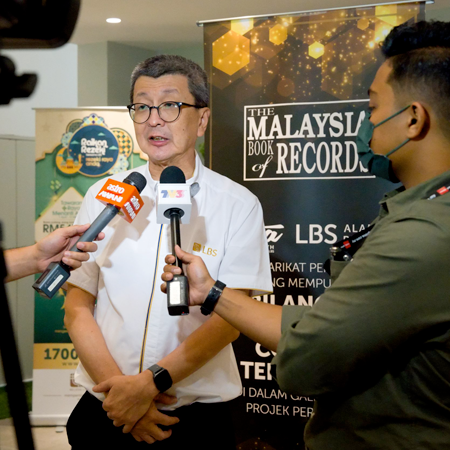
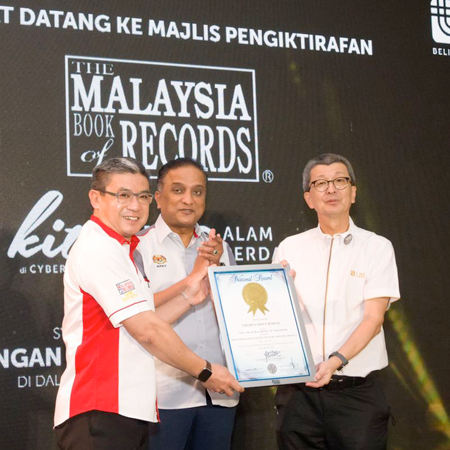
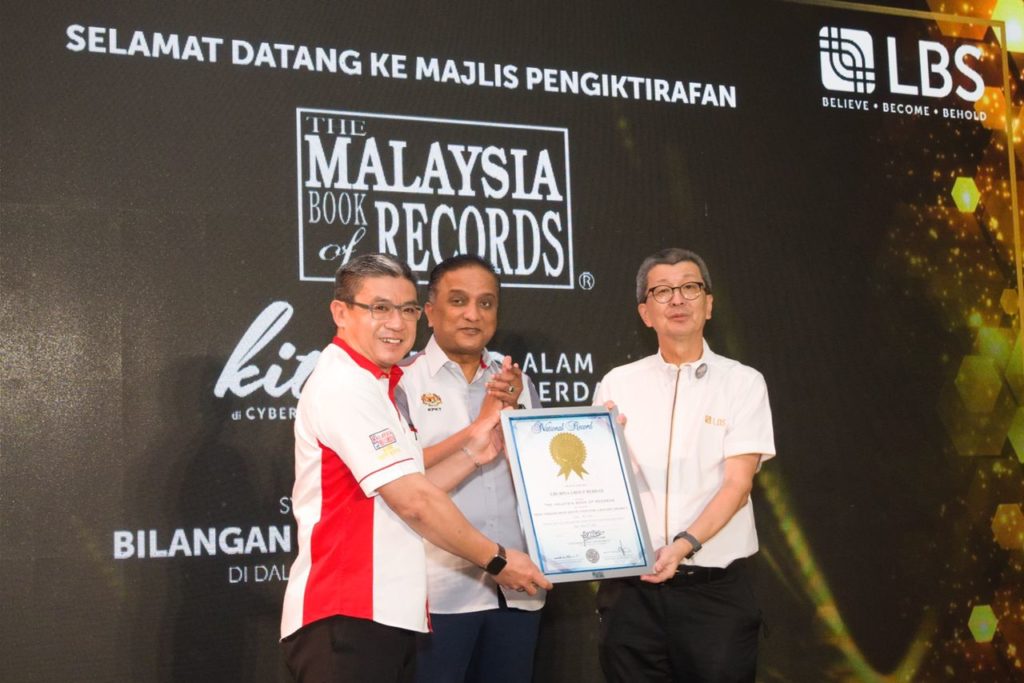
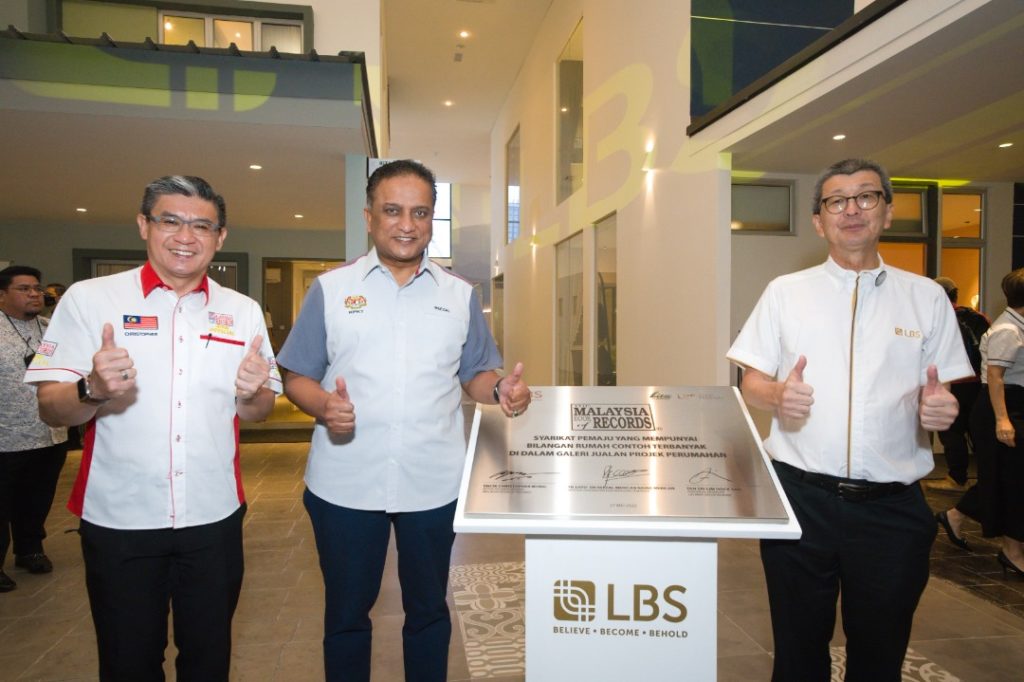
In the recent conferment of LBS Bina’s 2nd Malaysia Book of Records certificate, Tan Sri Lim Hock San had the opportunity to share with Astro AWANI, Astro AEC, and Buletin Utama in an exclusive television interview on LBS Bina’s customer-centric inspiration to build multiple showhouses under one sales gallery. He believes this will allow homebuyers to experience a conducive, convenient, and comprehensive house hunting experience, be it rain or shine. This record will serve as the benchmark for future LBS Bina sales galleries.